
BioSonic vs SonoBat UK
BioSonic is a cloud alternative to SonoBat UK that covers UK plus Netherlands, Denmark, Germany and Sweden in one platform. SonoBat brings conservative low-false-positive vetting on macOS and Windows desktop. BioSonic adds team workflow, browser access, automatic emergence graphs, weather overlays and weekly model updates, with per-GB pricing instead of per-seat 880 GBP licences.
Cloud-based deep learning on spectrograms vs desktop parameter extraction and rule-based vetting. Same WAV files, different philosophy.
At a glance
| Feature | BioSonic | SonoBat UK |
|---|---|---|
| AI approach | Deep learning on spectrograms | Full-spectrum extraction + ML + rule-based vetting (30 yrs) |
| Training data | 2.5M bat calls + 4M noise files | UK species-confirmed reference library (since 2017) |
| Benchmarked accuracy | 98.7% F1 score (Wilder Sensing) | No public benchmark (strong low-FP reputation) |
| Platform | Browser-based — works on any computer | Desktop (macOS, Windows) |
| Team workflow | Unlimited users, shared projects | Single-user per licence |
| Species per recording | Up to 7 | Sequence-level with vetting |
| Social & feeding calls | Separated automatically | Buzz Mode + vetter |
| Noise filtering | Deep-learning noise model (4M samples) | Scrub tool + quality assessments |
| Model updates | New AI model every weekend | Infrequent releases |
| Cloud storage | 9 years EU-hosted | Local only |
| Report generation | One-click charts, maps, Word | Customisable Vetting Table, iBatsID format |
| Detector compatibility | Any WAV-producing detector | Any full-spectrum WAV detector |
| Geographic coverage | UK, NL, DK, DE, SE | UK only |
| Pricing | Per-GB, all-inclusive | £880 perpetual or £320/£640/£960 lease (1/2/3 yr) |
AI image recognition on spectrograms
BioSonic converts each recording into a spectrogram image and runs it through a convolutional neural network trained on 2.5 million labelled bat calls. The model sees the full time-frequency picture, detecting multiple species, social calls, and feeding buzzes in a single pass.
SonoBat takes a different path: it extracts quantitative call parameters — frequency, duration, bandwidth, slope — and feeds them into a classifier combined with rule-based vetting algorithms refined over three decades.
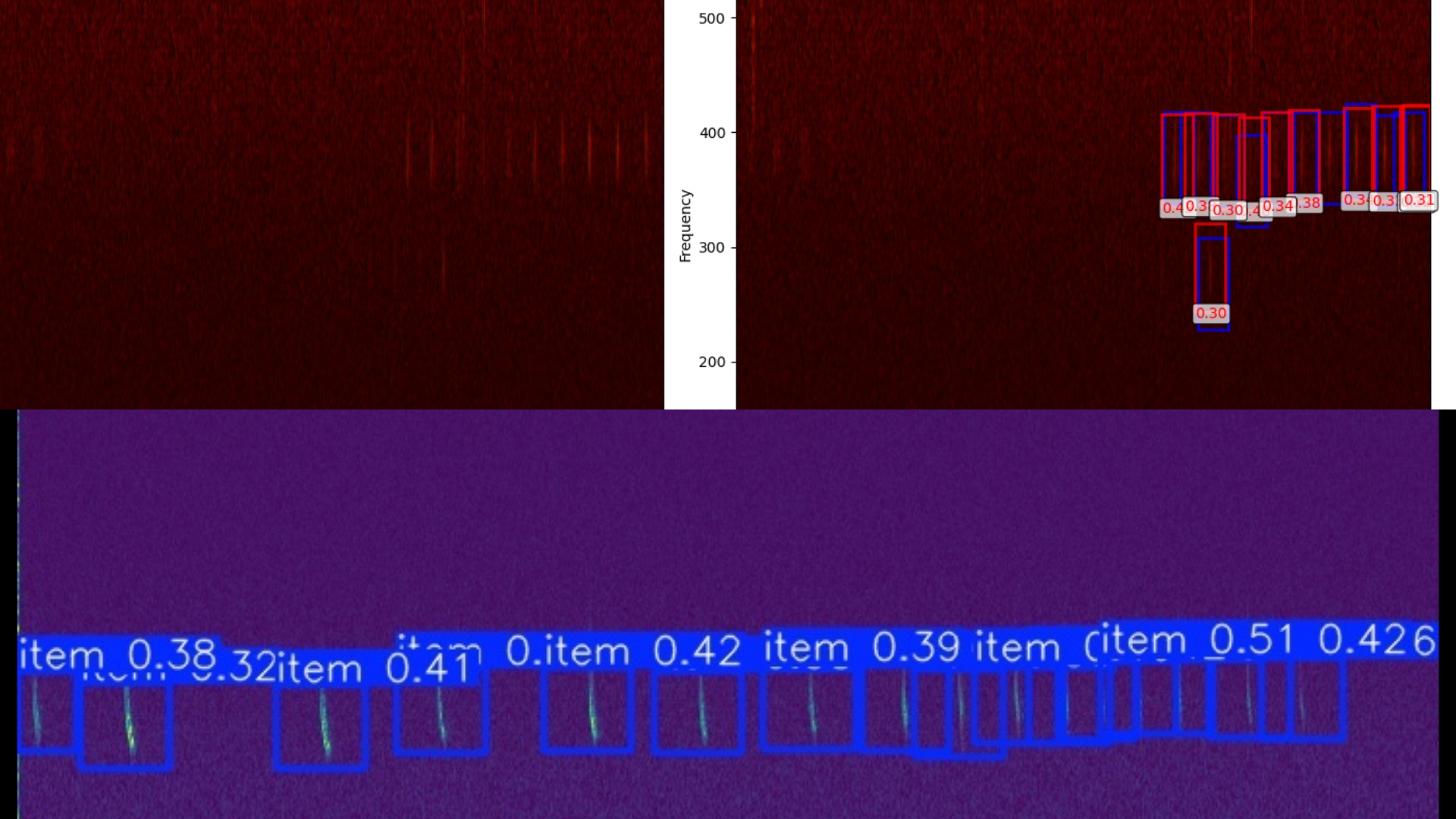
Trained on millions of examples
The model is curated by 12 bat experts across five European countries and retrained every weekend. 3.5 million noise files teach the AI to reject rain, wind, insects, and equipment noise before classification.
SonoBat's UK reference library contains 38,187 calls covering 17 UK and Ireland species (build 30.1, October 2023), with quality thresholds that reject ambiguous calls rather than force a classification.
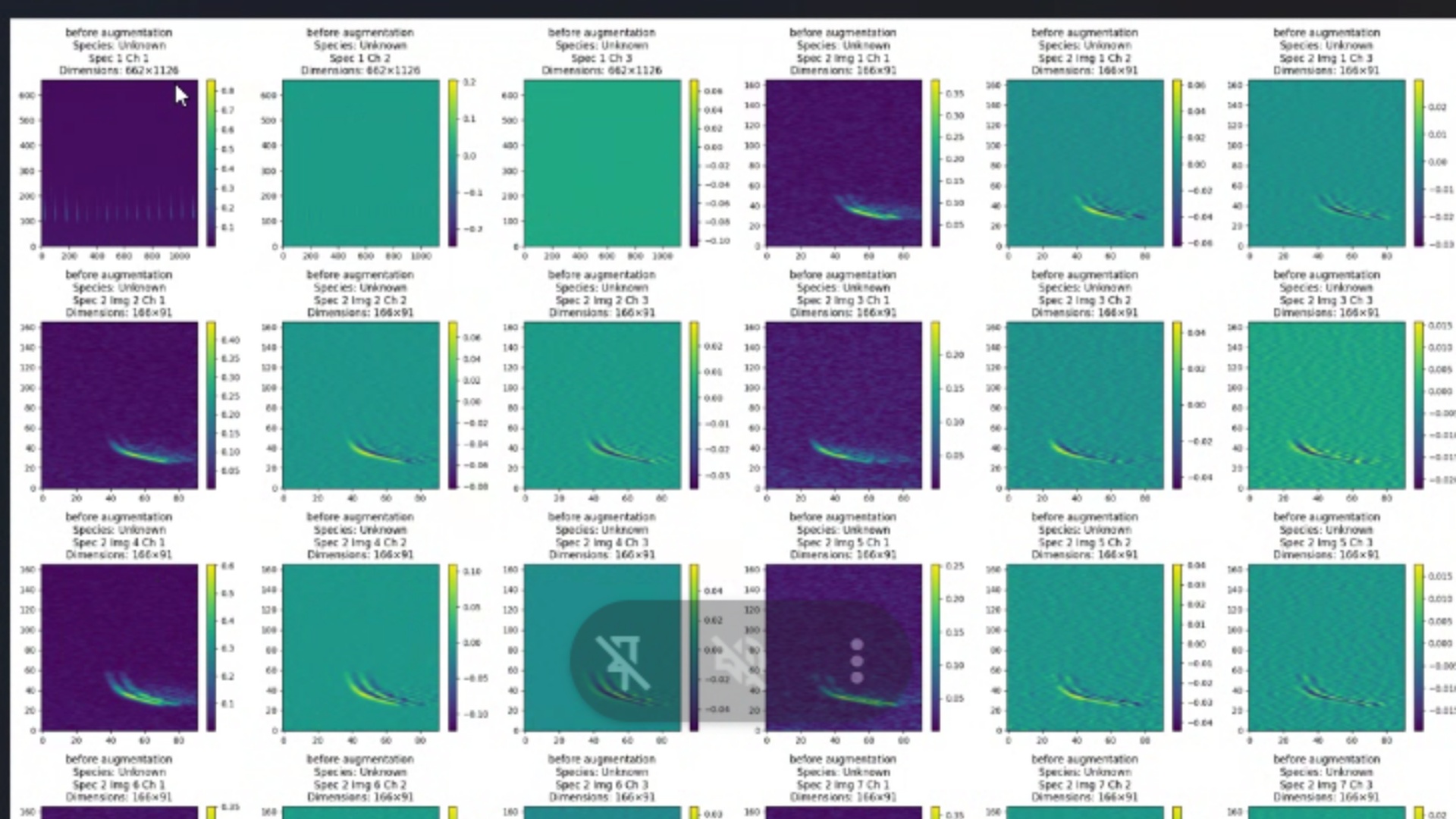
No public head-to-head benchmark exists between BioSonic and SonoBat UK. BioSonic achieved 98.7% F1 score in the independent Wilder Sensing benchmark; SonoBat has a strong reputation but no published large-scale benchmark.
BioSonic's 98.7% F1 score comes from the independent Wilder Sensing benchmark. SonoBat has a well-earned reputation for low false-positive rates, but comparable large-scale results have not been published. Have labelled recordings? We will run a free comparison.
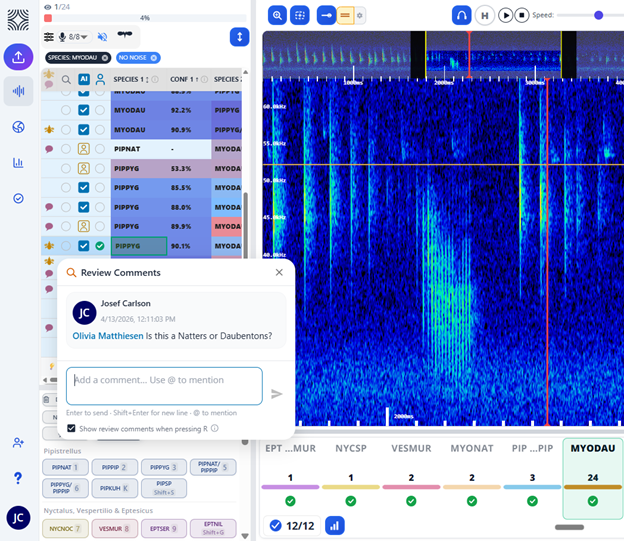
Spectrogram review
Inspect every call visually. Confirm or override AI classifications with right-click bounding boxes. Every decision is logged with a timestamp and user ID.
SonoBat reviews happen in the desktop Vetting Table. Customisable columns, but no browser-based collaboration.
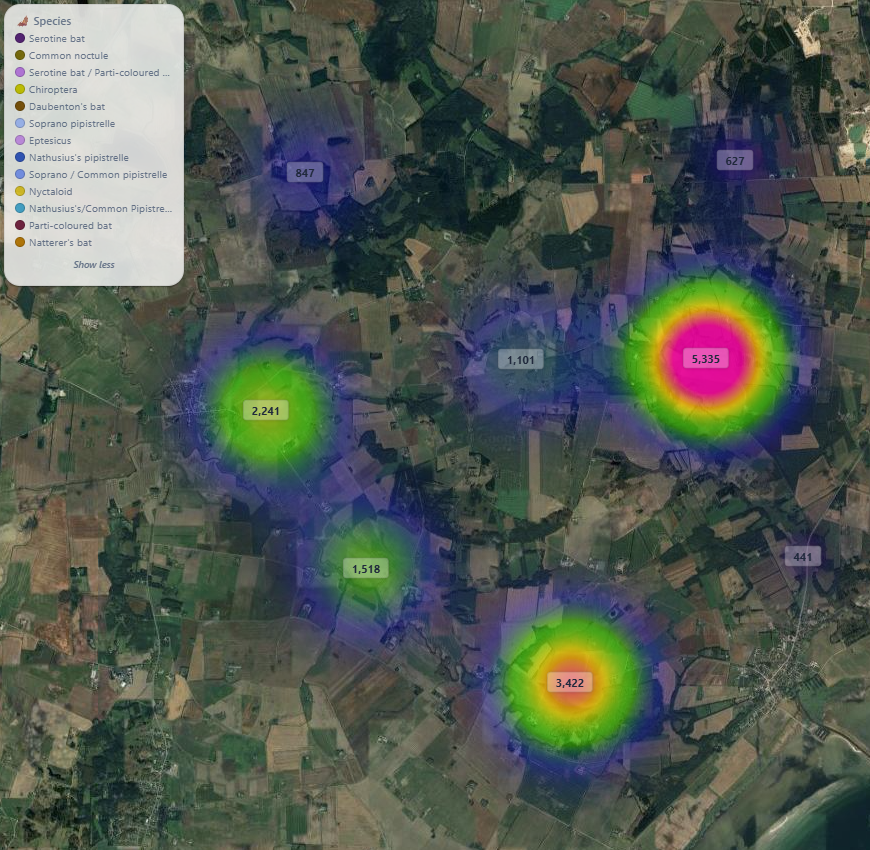
Species heatmaps
See bat activity across your entire site on an interactive map. Filter by species, date, or time of night. One click to export.
SonoBat does not include mapping. You build maps manually from exported data.
Since joining BioSonic our analysis time has reduced significantly. The team is excellent in their support, super quick to respond.
— Luke Waddison, Senior Ecologist, Wharton (UK)
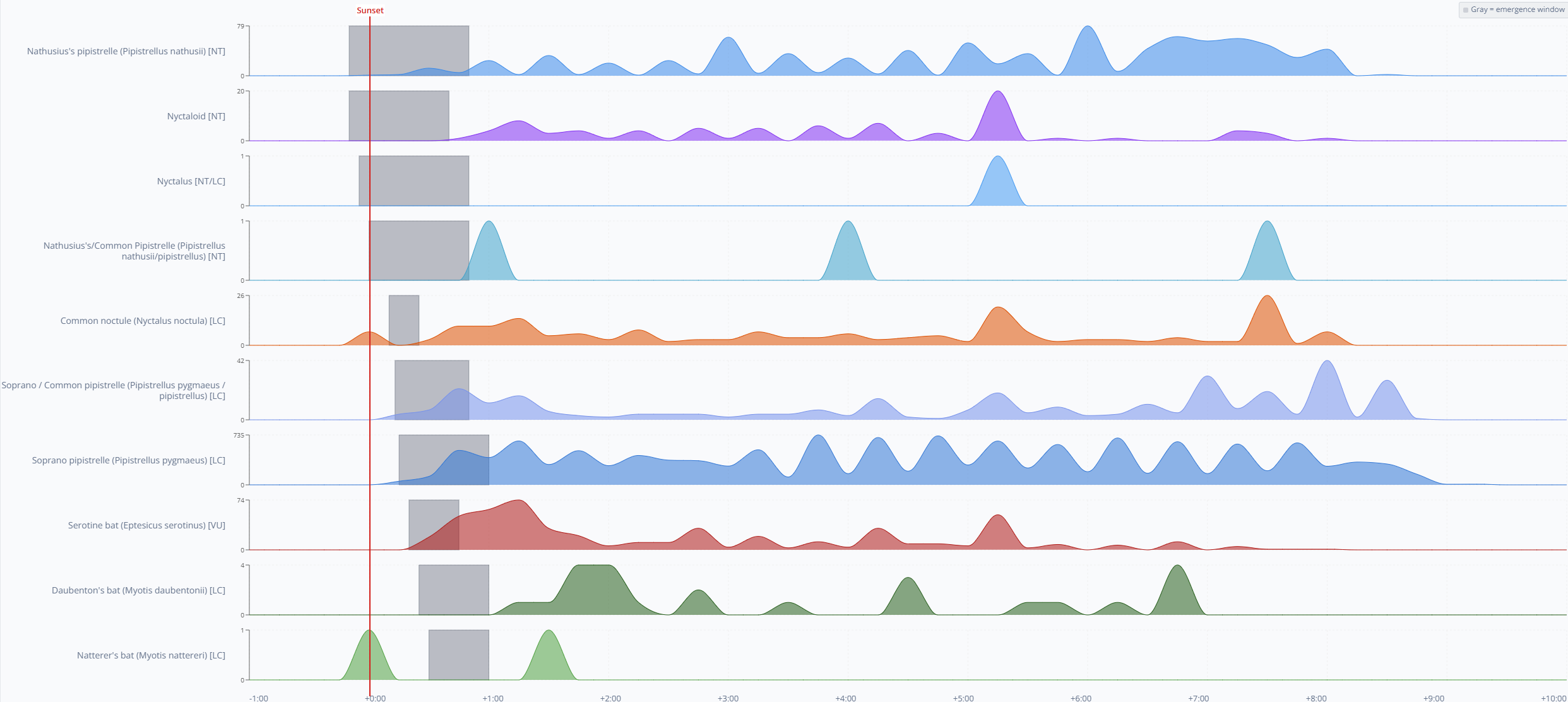
Emergence time analysis
Automatic emergence graphs pinpoint when bats leave roosts. Crucial for roost characterisation reports.
With SonoBat, building emergence graphs requires manual export and Excel work.
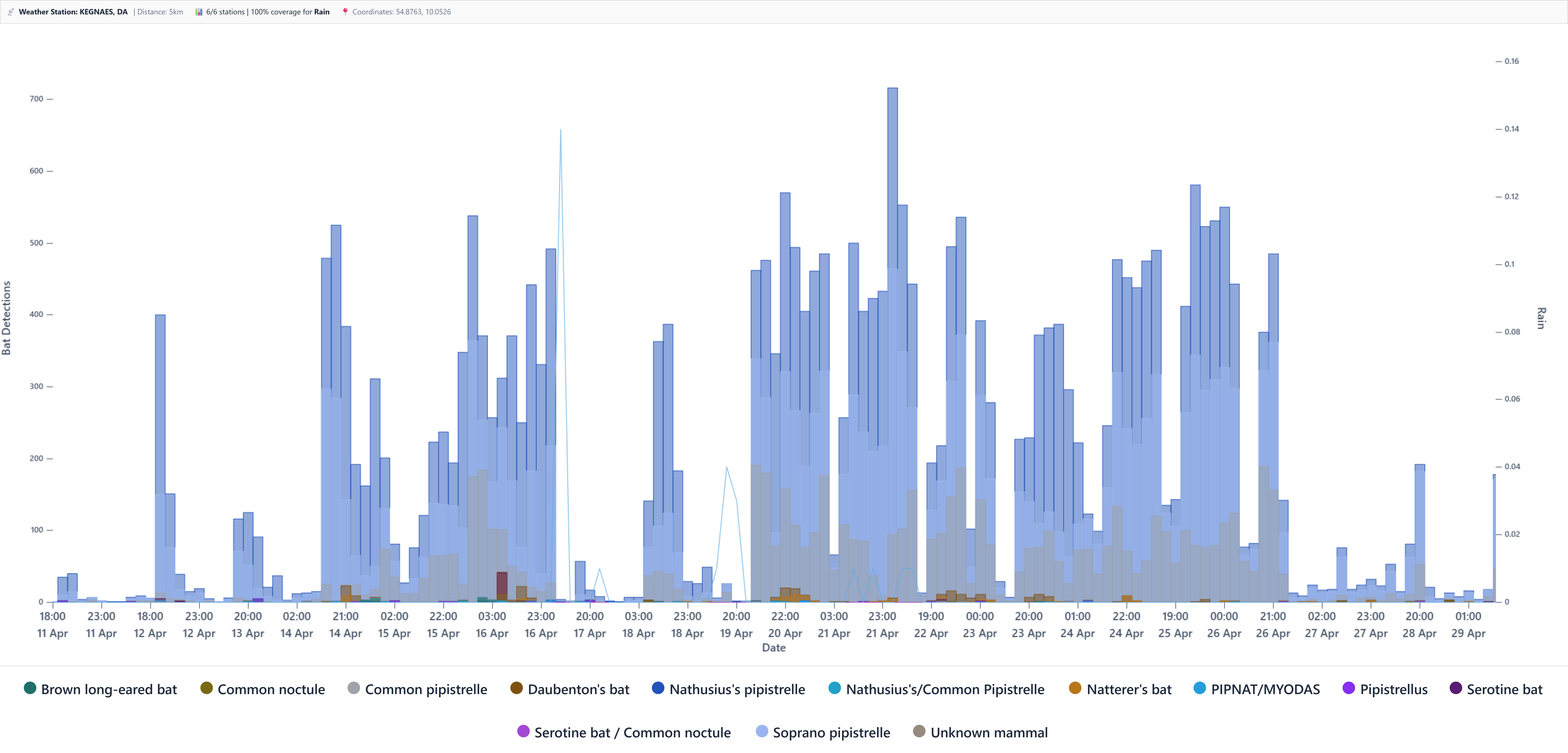
Weather integration
BioSonic automatically overlays temperature, wind, and rain data on your activity charts. No manual data entry.
SonoBat does not integrate weather data. You source and merge it yourself.
Choose BioSonic
- Want the highest benchmarked accuracy — 98.7% F1 means less time fixing wrong classifications
- Consultancy team — unlimited users, shared projects, single audit trail
- Integrated spectrogram review built into the platform — no switching between apps
- One-click charts, maps, emergence graphs, weather overlays, Word reports
- Up to 7 species per recording with automatic feeding buzz and social call separation
Choose SonoBat
- Prefer working offline on your own computer
- Need real-time analysis in the field with SonoBat LIVE
Some teams use both — SonoBat for tricky manual vetting, BioSonic for team workflow and reporting.
Is SonoBat UK more accurate than BioSonic?
No public head-to-head benchmark exists. BioSonic achieved 98.7% F1 score in the independent Wilder Sensing benchmark. SonoBat has a strong reputation for low false-positive rates built over 30 years, but has not published comparable large-scale results. Have labelled recordings? We will run a free comparison. See our benchmarks page for BioSonic's detailed results.
Can I use my existing SonoBat recordings in BioSonic?
Yes. Both tools accept standard WAV files from any full-spectrum bat detector. Upload the same recordings to BioSonic for a second opinion or to take advantage of cloud-based team features. No conversion or re-recording is needed.
Does BioSonic cover all UK bat species?
Yes. BioSonic covers all UK bat species and also supports the Netherlands, Denmark, Germany, and Sweden. SonoBat UK is limited to UK species, with a separate SonoBat North America product for that region.
How much does SonoBat UK cost compared to BioSonic?
SonoBat UK costs £880 for a perpetual licence, or £320/£640/£960 for a 1/2/3-year lease. Build 30.1 (October 2023) includes a 38,187-call UK reference library covering 17 UK and Ireland species. Each licence covers one user. BioSonic charges per GB per year with unlimited users included. The cheaper option depends on your data volume and team size. Both offer free trials so you can estimate costs before committing.
Can multiple team members use SonoBat UK simultaneously?
SonoBat UK licences are single-user. Each team member needs their own licence. BioSonic includes unlimited users per organisation with shared projects, which is more cost-effective for teams. See our product page for details on team features.
Does SonoBat UK work offline?
Yes. SonoBat is a desktop application that processes everything locally, so it works without an internet connection. BioSonic requires internet access to upload recordings and retrieve results, but works from any browser on any device once connected.
How often are BioSonic and SonoBat updated?
BioSonic deploys a new AI model every weekend, incorporating the latest training data from its growing library of 2.5 million bat calls. SonoBat releases updates less frequently as version releases. BioSonic's weekly cycle means accuracy improvements reach users faster.
- SonoBat UK build 30.1 (October 2023): 38,187-call reference library, 17 UK + Ireland species
- SonoBat pricing: £880 perpetual, £320/£640/£960 lease (1/2/3 year)
- SonoBat: sonobat.com
Last verified: 2026-04-26.
BioSonic vs Kaleidoscope Pro
98.7 percent F1 vs 73.0 percent. 13.4x fewer false positives. Cloud vs desktop.
BioSonic vs BTO Acoustic Pipeline
Private cloud vs free-tier-with-data-sharing. 98.7 percent F1 vs unbenchmarkable.
BioSonic vs BatExplorer
Any detector vs Elekon-only. Cloud team vs Windows desktop.
Ready to try it?
See how BioSonic handles your recordings
Upload a batch of WAVs and compare results against your current workflow. No commitment, no credit card, no data sharing required.
Questions? Email josef.carlson@biosonic.se